
 By Admin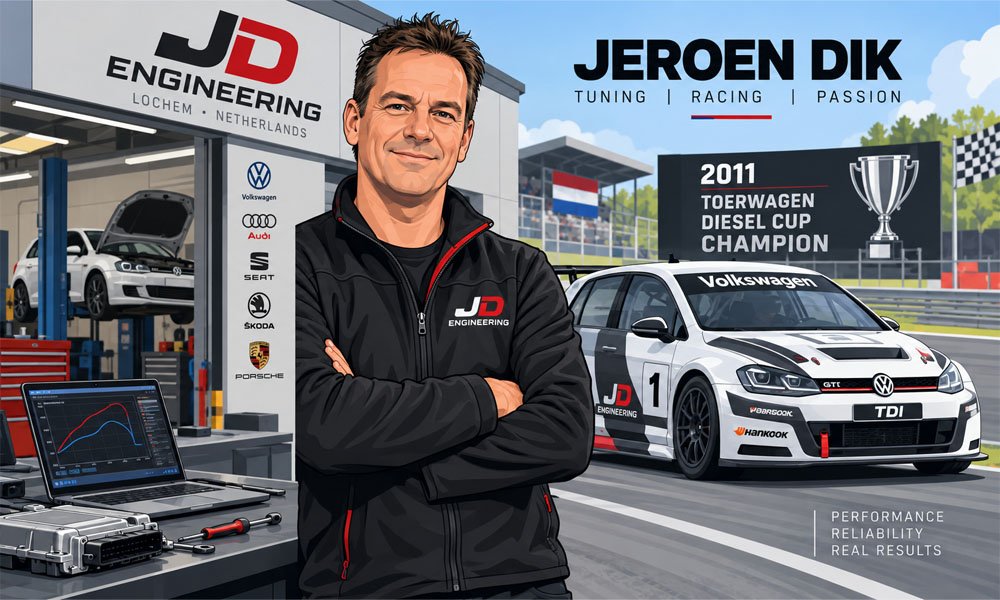
Some car experts become famous for making cars very fast. Others become known through racing. Jeroen Dik is interesting because his career brings both worlds together. He is a Dutch car tuner. He is also a racing driver and the founder of JD Engineering.
For many car fans Jeroen Dik is closely linked with Volkswagen cars. His work also covers other Volkswagen Group brands. His career includes engine tuning. ECU work. dyno testing. and diesel racing.
But what makes his story special? It is not only about speed. His work also looks at smooth power. safe tuning. and good car control. In this article we will explore his early interest in cars. his tuning career. JD Engineering. G60 engines. and the start of his racing journey.
Who Is Jeroen Dik?
Jeroen Dik is a Dutch car tuner and racing driver. He is best known for his work with JD Engineering. The company became known for tuning Volkswagen Group cars and helping drivers get more power from their cars.
Online profiles report that Jeroen Dik was born on March 13 1969. He is from the Netherlands. His public career is mostly about cars and racing. There is much less public information about his private life.
Some online sources also use the nickname “Tuning Yoda” for him. The name points to his calm and careful way of working. Rather than only chasing huge power numbers he has focused on making cars work well as a whole.
Jeroen Dik’s Early Love for Cars
Jeroen Dik developed a strong interest in cars and engines at a young age. He wanted to understand how machines worked. This kind of interest can start with a simple question. What makes one car faster than another?
His early interest later became useful in his tuning career. Understanding an engine means looking at many parts together. Fuel. air. heat. and engine control all play a role in how a car runs.
Some online stories describe his early years as a time when he liked taking machines apart and learning from them. Still. not every childhood story has strong public proof. It is better to treat those details as reported stories rather than confirmed facts.
How Jeroen Dik Started Car Tuning
Jeroen Dik’s tuning career is linked with the 1990s. During this period he became involved with Volkswagen performance cars. This was a time when car tuning was often a mix of hands-on engine work and simple electronic changes.
Tuning is not just about adding power. More power can also mean more heat and more stress. A good tuner needs to know where those limits are. The goal is to make the car stronger without creating new problems.
This practical way of thinking became important in Jeroen Dik’s work. He looked at how parts worked together. Testing also became an important part of the process. A change should not only look good on paper. The car should also work well when driven.
Jeroen Dik and His Famous G60 Work
One important part of Jeroen Dik’s early career is his work with G60 engines. Volkswagen used the G-Lader supercharger in several cars. These engines became popular with car fans who wanted more performance.
G60 engines could be tricky to tune. Airflow. fuel. ignition. and heat all needed attention. A small change in one area could affect other parts of the engine.
Jeroen Dik also became linked with a Volkswagen Golf Mk1 using a 1.9-litre 16V G60 setup. Projects like this showed his hands-on side. They also helped build his name among Volkswagen fans who enjoyed older performance cars.
Jeroen Dik and the Start of JD Engineering
Jeroen Dik later built his own tuning business called JD Engineering. The company is based in Lochem in the Netherlands. It grew into a specialist name in the car tuning world.
JD Engineering works mainly with Volkswagen Group cars. Its work includes engine tuning. ECU software changes. dyno testing. turbo upgrades. and other performance changes.
The idea is simple. A customer may want a car that feels faster and stronger. But the car should still be easy to drive. This balance helped JD Engineering build a strong name among drivers who wanted more performance without losing everyday comfort.
Why Jeroen Dik Focuses on Volkswagen Cars
Volkswagen cars became a major part of Jeroen Dik’s career. His work also reaches other brands from the same group. These include Audi. SEAT. and Škoda. Porsche is also mentioned in connection with the company’s performance work.
There is a good reason for this focus. Many Volkswagen Group cars share engines and other parts. A tuner who works with these systems for many years can learn their common strengths and weak points.
This deep knowledge can make a big difference. For example. two cars may use related engines but need different tuning. The gearbox. weight. turbo. and factory settings can all change how the car behaves.
Jeroen Dik’s ECU Tuning Style
Modern cars use computers to control many engine functions. This computer system is called the ECU. ECU tuning means changing the software settings that control how the engine works.
A tuner can adjust things such as boost. fuel. engine response. and torque. But these changes must be made with care. More boost can create more heat. More torque can also place extra stress on the clutch and gearbox.
This is where Jeroen Dik’s tuning style becomes interesting. The aim is not simply to make the biggest number possible. Good tuning should give the driver power that feels smooth. useful. and easy to control.
Jeroen Dik and the OEM+ Tuning Idea
The term OEM+ means making a car better while keeping much of its normal factory feel. Imagine a Volkswagen that looks almost standard. You drive it every day as normal. Then you press the pedal and feel a stronger response.
That is the basic idea behind OEM+ tuning. The car becomes quicker without feeling like a difficult race car. This can be very useful for people who want one car for both daily driving and weekend fun.
For Jeroen Dik’s work this idea fits well with the focus on smooth performance. A car does not need extreme changes to become more enjoyable. Sometimes the best upgrade is one that feels natural while you are driving.
The story now moves from tuning theory to testing. This is where dyno work becomes important and helps show whether a performance change really works.
How Jeroen Dik Uses Dyno Testing
A dyno is a machine that helps test a car’s power. The car stays in place while the machine measures how the engine performs. This can show power and torque in a clear way.
For a tuner like Jeroen Dik this data is very useful. It can show what happens before and after a change. Instead of making a guess the tuner can look at real results and make better choices.
The biggest power number is not always the best result. A car may have huge power but feel rough. A smooth power curve can make the car much nicer to drive. This is why dyno testing can be such an important part of good tuning.
Jeroen Dik’s Move Into Racing
Jeroen Dik did not stay only in the workshop. He also moved into racing. This gave him a chance to test cars in a much harder setting.
A race car faces strong heat and heavy engine load. The brakes work hard. The tyres also face more stress. The driver needs power that is easy to control when leaving a corner.
This gave Jeroen Dik a useful view of tuning. A car can look great during a short test. Racing can show if it can keep working well under pressure. His tuning knowledge and racing experience could therefore support each other.
Jeroen Dik’s 2011 Racing Success
One of the biggest moments in Jeroen Dik’s racing story came in the Toerwagen Diesel Cup. Reports say he finished second in the series in 2010. The next year brought an even bigger result.
Jeroen Dik is reported to have won the 2011 Toerwagen Diesel Cup championship. He raced a Volkswagen Golf VI TDI. This was an important result because it joined his love of Volkswagen cars with his skills as a driver.
Winning a race series takes more than a fast engine. The car needs a good setup. The driver needs to be steady. The team must also keep the car working well. Jeroen’s reported title showed the value of that complete approach.
Jeroen Dik and JD Engineering Today
Car tuning has changed a lot since Jeroen Dik first worked with older Volkswagen cars. Modern cars use many computers and sensors. Turbo engines are also common. Software now plays a huge role in engine control.
JD Engineering has stayed linked with performance tuning and Volkswagen Group cars. Its work includes modern engine software and other performance changes. The company’s long experience with these cars remains an important part of its story.
In 2026 car tuning also faces new challenges. Cars have tighter rules. Electric cars are growing. Software is becoming even more important. A modern tuner needs to keep learning as car technology changes.
Why Jeroen Dik Is Respected by Car Fans
There are many reasons car fans know the Jeroen Dik name. His career covers both tuning and racing. He has also spent many years working with Volkswagen Group cars.
His experience with older G60 engines gives his story a strong starting point. His later work with ECU tuning shows how his skills moved with new car technology. His racing career adds another side to his work.
Fans also care about how a car feels. More power can be fun. But smooth power can be even better for daily driving. A car that is fast and easy to control can bring more joy than one that only looks impressive on a power chart.
Jeroen Dik’s Place in the VAG Tuning World
Volkswagen Group cars have a huge fan base. Owners often look for ways to make their cars faster while keeping them useful. This is where specialists such as Jeroen Dik can attract strong interest.
His name has become linked with the VAG tuning scene. VAG is a common term used by car fans when talking about Volkswagen Group vehicles. These include Volkswagen. Audi. SEAT. and Škoda.
The long connection matters. It means his work is part of a wider tuning culture that has grown around these cars for many years. His career shows how older engine work and modern software tuning can exist in the same field.
The Value of Racing Experience
Racing can teach a tuner things that normal road driving may not show. A race car spends more time at high speed. The engine stays under load. Temperatures can rise. The driver must also make quick choices.
For Jeroen Dik this experience could help him understand how power behaves in real conditions. A car needs more than a strong engine. It needs good grip. good braking. and a setup that gives the driver confidence.
This is one reason his racing story fits so well with his tuning story. Both areas are about finding a good balance. The goal is not only speed. It is making the whole car work together.
Jeroen Dik’s Impact on Car Tuning
The Jeroen Dik story also shows how the tuning world has changed. Older cars often needed more hands-on engine work. Modern cars depend much more on software. Yet the basic goal remains the same.
A tuner wants the engine to work better. That may mean more power. It may also mean better response. stronger torque. or smoother driving. The best result depends on what the owner wants from the car.
Jeroen Dik has worked through both periods. His career is therefore useful for understanding how tuning has grown. It also shows why experience still matters even when modern tools become more advanced.
What Makes His Tuning Style Different?
The key idea is balance. Jeroen Dik’s work is often linked with useful performance rather than power for the sake of power. This makes sense for drivers who use their cars every day.
Think about two cars. One has a very large power figure but feels hard to control. The other has less power but responds smoothly. For normal driving many people may enjoy the second car more.
This is where the OEM+ idea fits. The car can feel close to its normal factory self while becoming faster. That simple approach can make a tuned car more fun without making every drive feel like a race.
Challenges in Modern Car Tuning
Tuning cars today is not always simple. Engines are more complex. Cars have more sensors. Gearboxes can also have their own software. A change in one system may affect another.
There are also stricter rules around emissions and road use. A tuning company needs to understand these rules and think about how changes affect the complete vehicle.
Technology is changing too. Electric cars are becoming more common. This means the future of tuning may look very different from the G60 days. Yet the need for careful testing and good technical knowledge will remain.
Jeroen Dik’s Legacy
Jeroen Dik has built a long career around cars. His work with JD Engineering helped make his name known among Volkswagen Group fans. His early G60 work and later ECU tuning show how his skills developed over time.
His racing career added another important part to that story. The reported 2011 Toerwagen Diesel Cup title remains one of his best-known racing achievements. It showed that his work could also be tested in real competition.
His lasting value comes from the mix of tuning and racing. He has worked with engines. software. testing. and real race cars. That makes his story more than a simple tale about making cars faster.
Conclusion
Jeroen Dik is a Dutch car tuner and racing driver with a long connection to Volkswagen performance cars. Through JD Engineering he built a name around tuning. testing. and making cars more enjoyable to drive.
His story began with an interest in engines and older Volkswagen performance cars. His work with G60 engines helped shape his early career. Later he moved deeper into ECU tuning and modern performance work.
Racing also became a major part of his journey. His reported 2011 Toerwagen Diesel Cup win showed his ability to compete with a diesel Volkswagen Golf VI TDI. It also brought his technical skills and driving skills together.
Today the Jeroen Dik name remains interesting to car fans because his career covers several parts of the tuning world. His story shows that good tuning is not only about the biggest number. It is about power. control. testing. and a car that still feels good to drive.
For anyone trying to understand his tuning style the simple answer is clear. Make the car better. Test the result. Keep it useful. Then enjoy the drive.
(FAQs)
Who is Jeroen Dik?
Jeroen Dik is a Dutch car tuner and racing driver. He is best known as the founder of JD Engineering. His work is strongly linked with Volkswagen Group cars and performance tuning.
What is Jeroen Dik known for?
Jeroen Dik is known for car tuning and racing. He has worked with Volkswagen cars for many years. His career also includes G60 tuning. ECU tuning. dyno testing. and diesel racing.
When was Jeroen Dik born?
Online profiles report that Jeroen Dik was born on March 13 1969. However. this date should be treated as a reported detail unless supported by a strong public source.
What is JD Engineering?
JD Engineering is the tuning company founded by Jeroen Dik. It is based in Lochem in the Netherlands. The company works on engine tuning. ECU software. testing. and other car performance upgrades.
Which car brands does JD Engineering work with?
JD Engineering is mainly known for Volkswagen Group cars. This includes Volkswagen. Audi. SEAT. and Škoda. The company has also been linked with performance work on Porsche vehicles.
What did Jeroen Dik do with G60 engines?
Jeroen Dik became known for his work with Volkswagen G60 engines. These engines used a G-Lader supercharger. His work focused on improving power while keeping the engine useful and reliable.
What does Jeroen Dik’s OEM+ tuning style mean?
OEM+ tuning means making a car faster while keeping much of its normal factory feel. The idea is to add useful power without making the car difficult to drive every day.
Did Jeroen Dik win a racing championship?
Yes. Reports say Jeroen Dik won the 2011 Toerwagen Diesel Cup championship. He raced a Volkswagen Golf VI TDI. The result became an important part of his racing career.
Why is dyno testing important in Jeroen Dik’s work?
A dyno helps measure engine power and torque. It lets a tuner compare results before and after changes. It can also help show whether power is smooth instead of only looking at the highest number.
Why is Jeroen Dik respected by car fans?
Jeroen Dik is respected for his long experience with Volkswagen Group cars. His work combines tuning and racing. His focus on smooth power. testing. and useful performance has helped build his name in the tuning world.
You may also read: Neatlanta Review: What Is It and What Does the Name Mean?