
 By Admin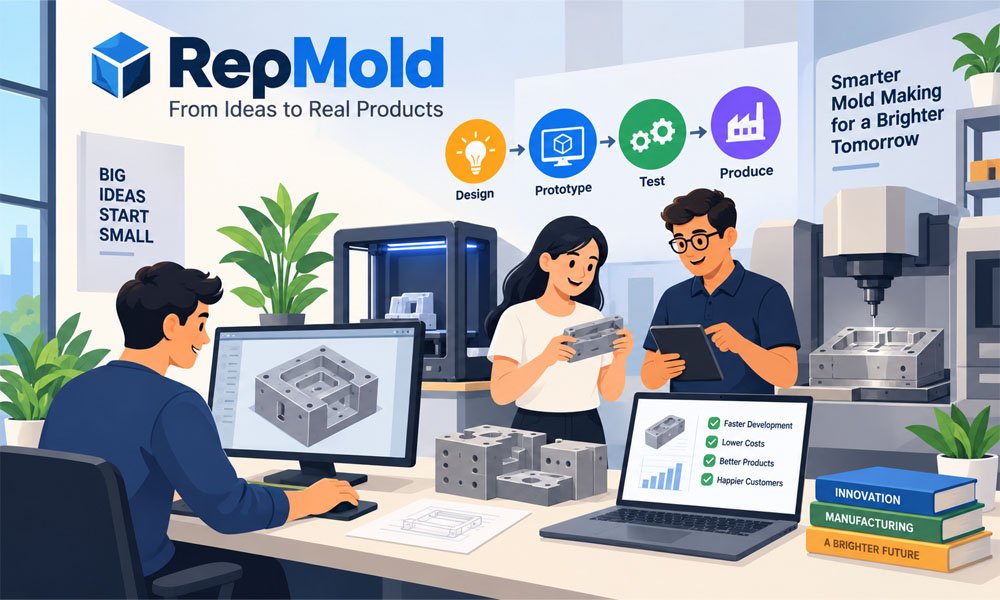
Starting a new product business can feel exciting. It can also feel hard. A good idea is only the first step. You still need to design the product. You need to test it. You also need to find a smart way to make it.
This is where RepMold comes into the picture. The term is linked with digital design and modern mold making. It may involve CAD. It may also use 3D printing. Scanning. CNC machines. Automation. Testing. These tools can help a startup move from an idea to a real product.
But there is one thing to know first. RepMold does not have one clear official meaning. Different websites use the word in different ways. So this guide looks at the real tools behind the idea. It also explains what new businesses should know before using them.
What Is RepMold?
RepMold is generally used to describe a modern way to design and make molded products. It brings digital tools into parts of the mold and product process.
A simple example can help. Imagine a startup wants to make a new phone stand. The team can first build the stand on a computer. They can change its shape and size. They can then make a sample before spending money on a large production mold.
The process may include digital design. It may include a 3D scan of an old part. A 3D printer may make a sample. A CNC machine may create a mold. The final parts may then be made through a normal molding process.
This means RepMold is better viewed as a broad idea than one special machine. It is also not the same thing as 3D printing. The exact process depends on the product and the business.
Why RepMold Matters for Startups
For a new business every mistake can cost money. A small change to a product can become a large problem if a mold has already been made.
Digital tools can help startups spot some problems earlier. A designer can change a digital model before a physical mold is built. A team can also make a simple sample and check how it feels and works.
Think about a startup making a new kitchen tool. The first design may have a handle that feels too large. With a digital model the team can change the handle. A new sample can then be made for another test.
This can make product work more flexible. It may also help a small team test ideas without starting the whole process again each time.
RepMold can be useful for startups that need small batches. It may also help businesses that expect many design changes during early product work.
How RepMold Works
A RepMold style process usually starts with a digital product design. The design may be made from the start in CAD. It may also come from a 3D scan of an existing object.
The team then checks the model. They can look at the shape. They can check the size. They can review wall thickness and other details. Some software can also help study heat and material flow.
Next comes a physical sample. A startup may use 3D printing to make this sample. It can then test the product in the real world. Does it fit? Does it work? Does the size feel right?
If something is wrong the digital model can be changed. Another sample can then be made. This cycle can continue until the design is ready.
After that the business can create a production mold. The mold may be made with CNC machining or another method. The final parts can then be made in larger numbers.
The last step is quality checking. Parts need to match the required size and shape. They also need to work as planned. Digital tools can help with this work but real product checks are still important.
RepMold and CAD Design
CAD means computer aided design. It is one of the key tools in a modern manufacturing process.
A designer can use CAD software to build a product on a computer. The model can show its shape and size. It can also show small details that may matter during production.
One big benefit is easy editing. Imagine a startup has made a bottle design. The first version may have a lid that is too tight. The designer can change the model instead of making a whole new physical design from the start.
CAD files can also be shared with other teams. A mold maker can use the design to plan the tool. A 3D printer can use the file to make a sample. A CNC machine can use digital instructions to make parts.
Good CAD work is important. A poor digital model can lead to problems later. The design must be checked before the business moves into costly production work.
RepMold and 3D Printing
3D printing is another useful tool linked with the RepMold idea. It creates objects from digital designs. It usually builds the object layer by layer.
For a startup this can be very useful during early product work. A team can print a sample without ordering a large production mold. This can save time during testing.
For example a startup may want to make a new desk item. The first version may look good on screen. After printing it the team may find that the base is too weak. They can change the design and print another version.
3D printing can also make some mold parts or inserts. It can be useful for complex shapes and small runs. Yet it does not replace every type of molding.
Large production orders may still work better with traditional molds. The best choice depends on the material. It also depends on the number of parts and the quality needed.
This is an important point for any startup. RepMold does not mean that every product must be 3D printed. It means digital tools can become part of a wider product and mold process.
RepMold and CNC Machining
CNC machining is another important tool in modern manufacturing. It uses computer instructions to control cutting tools.
A CNC machine can make molds and mold parts with high accuracy. It can also create prototypes and finished components.
For startups this can be useful when a product needs a strong mold or a precise part. CNC work can also be used after the digital design has been tested.
This is where the digital and physical sides of RepMold begin to meet. The computer model guides the machine. The machine then turns that plan into a real object.
RepMold Startup Benefits
One big benefit of a RepMold startup approach is speed. A new business can test an idea before spending a lot on a final mold. This gives the team more time to find problems and improve the product.
Cost can also matter. Early changes to a digital model may be easier than changing a finished mold. A startup can test a few versions first. This can help avoid spending too much money on a design that does not work.
Flexibility is another useful point. A startup may want to change a product after getting customer feedback. Digital tools make these changes easier. This can help a young business respond to new needs without starting the whole process again.
How Startups Can Use RepMold
A startup can use RepMold ideas during many stages of product development. A simple product can begin as a CAD model. The team can then make a sample and test it before moving into full production.
Small batches are another good use. A new business may not need thousands of products at first. It can make a smaller number while it learns what customers like. This can reduce the risk of making too much stock.
RepMold can also help with custom products. A company may need different sizes or shapes for different buyers. Digital files can make these changes easier to manage.
RepMold vs Traditional Molding
Traditional molding is still very useful. It is often a strong choice when a company needs a large number of the same part. Once the mold is ready it can produce many parts quickly.
The main difference is often seen during the early design stage. Traditional mold making can need more work before changes are made. A digital approach lets teams test and change the design first.
This does not mean RepMold replaces traditional molding. In fact both can work together. A startup might use CAD and 3D printing for early tests. It can then use a strong traditional mold for large production.
RepMold Startup Costs
There is no single RepMold startup price. The term does not have one confirmed product or pricing plan. Costs depend on the tools and services a business chooses.
A startup may spend money on CAD software. It may also need 3D printing. Other costs can include scanning. CNC work. Mold materials. Testing. Workers. Quality checks. Production equipment can add even more to the total.
The number of parts also matters. Making ten samples is very different from making 100,000 parts. A startup should compare the full cost before choosing a process.
RepMold Challenges for Startups
Every new method has limits. Equipment can be expensive. A small company may not have enough money to buy every machine it needs. Working with an outside service can be a better choice at first.
Training is another challenge. Workers need to know how to use CAD tools and machines. They also need to understand materials and quality checks. Good training can prevent costly mistakes.
Materials can also create limits. Not every material works with every process. A startup must think about strength. Heat. Surface finish. Cost. Mold life. The right material depends on the product.
RepMold and Quality Control
A good digital model does not mean every finished part will be perfect. Real parts still need to be checked. Teams may measure size and shape. They may also test strength and fit.
Quality checks become even more important when production grows. If one small problem appears in a large batch it can affect many products. Regular checks can help find such problems early.
This is why RepMold should not be seen as a way to remove human checks. Digital tools can help find problems. People still need to review the results and test real products.
RepMold and Business Growth
A smart startup does not need to build a huge factory on day one. It can start with one product. The team can test the idea. It can learn from early users. It can then improve the design.
As sales grow the business can change its production plan. A process that works for a small batch may not be best for a large order. The company may later move to stronger molds and faster machines.
This step-by-step approach can help control risk. The business can spend more money only when demand supports it. That makes digital product testing useful for young companies that are still finding their place.
RepMold and Sustainability
Better planning may help reduce waste. If a team finds a design problem before making a large mold or batch it may avoid wasted material. Rapid testing can also reduce the number of failed product versions.
Some 3D printing methods can use material only where it is needed. Digital planning can also help a company make the right number of parts. This may reduce extra stock and unused materials.
Still RepMold should not be called fully green by default. Machines use energy. Materials can create waste. Shipping also has an impact. A business should look at the full process before making claims about being eco-friendly.
The Future of RepMold
The future of digital manufacturing may bring even more useful tools. AI could help designers check product models. It may also help find possible problems in production data.
Digital twins could also become more common. A digital twin is a computer model linked to a real product or machine. It can help teams study how something works before making a change in the real world.
Smart factories may connect machines and sensors. These systems can track heat. Pressure. Machine health. Cycle times. Such data may help businesses spot problems sooner and plan maintenance.
Common RepMold Myths
One common myth is that RepMold is one special machine. There is no strong evidence for this. The term is used in different ways and may describe a mix of digital manufacturing methods.
Another myth is that RepMold is simply another name for 3D printing. That is also not correct. 3D printing can be one part of the process. CNC machining. CAD. molding and testing may also be involved.
Some people may also think it will replace traditional manufacturing. That is unlikely. Different products need different methods. Large orders may still work best with traditional molds.
Is RepMold Right for Your Startup?
The right choice depends on the product. A startup making a few hundred custom parts may have different needs from a company making millions of simple parts.
Before choosing a RepMold startup approach think about production volume. Check the material. Look at the budget. Consider the needed strength and surface finish. Also think about how often the design may change.
The safest approach is to start small. Test the product. Learn from the results. Improve the design. Then choose the production method that fits the growing business.
Conclusion
RepMold is best understood as an emerging term linked with digital design and modern manufacturing. It can bring tools such as CAD. 3D printing. CNC machining. scanning and automation into one wider workflow.
For startups the biggest value may be flexibility. A business can test ideas before making large investments. It can also make design changes and create small batches when needed.
But there is no magic shortcut. Costs. training. materials. testing and production needs all matter. The best RepMold startup plan is one that uses the right tools for the right job.
The name may still be loosely defined. The technology behind many of its ideas is already real and widely used. For a new business the smartest move is to focus on those proven tools and build a simple process that can grow over time.
(FAQs)
What is RepMold in simple words?
RepMold is a term linked with modern mold making and digital manufacturing. It may use CAD design. 3D printing. 3D scanning. CNC machines and testing. The exact meaning can vary between sources.
Is RepMold a real technology?
The tools linked with RepMold are real and widely used. However RepMold itself does not have one clear industry definition. It is better to view it as a broad idea rather than one fixed machine or process.
How can RepMold help a startup?
RepMold can help startups test products before making expensive production molds. A business can change its digital design. Make a prototype. Find problems. Then improve the product before moving into larger production.
Does RepMold use 3D printing?
It can. 3D printing may be used to make prototypes. It can also create some mold parts or inserts. But RepMold is not the same as 3D printing. Other tools may also be used.
Is RepMold cheaper than traditional molding?
Not always. Digital tools can lower some early costs by helping teams find design problems sooner. Traditional molding can still be cheaper for very large orders because one strong mold can make many parts.
Can small businesses use RepMold?
Yes. Small businesses may use digital design and rapid prototypes without buying every machine themselves. They can work with outside manufacturers for scanning. printing. CNC work or mold making.
What products can RepMold help make?
The methods linked with RepMold can support many products. Examples include electronics cases. household items. car parts. machine parts. tools and some medical device components. The right process depends on the product.
Does RepMold replace traditional manufacturing?
No. RepMold does not need to replace traditional manufacturing. A company can use digital tools during design and testing. It can then use traditional injection molding or other methods for large-scale production.
Is RepMold good for custom products?
It can be useful for custom products because digital designs are easier to change. A business can adjust sizes. shapes or other features and make new samples without rebuilding the whole process.
What should a startup check before using RepMold?
A startup should check its budget. Product size. material. production volume. quality needs and design changes. It should also consider training and testing. Starting with a small project can help the team learn before making a larger investment.
You may also read: Jeroen Dik: How-To Understand His Tuning Style and Racing Success